
If you’ve ever used a Q-tip to clean your ears, you’re certainly not alone. For generations, many people have reached for cotton swabs as part of their daily hygiene routine, yet healthcare professionals have advised against putting them inside the ear canal for years.
So, what are Q tips for?
The answer is simple: Q-tip is a brand name for a cotton swab, and these products were never designed to clean inside your ear canal. Instead, they’re intended for a variety of personal care, cosmetic, and household tasks.
Q-tips are useful for:
- Applying or removing makeup
- Applying ointments or creams
- Personal grooming
- Arts and crafts
- Cleaning small, hard-to-reach spaces on the outside of electronics and household items
- Cleaning around, but not inside, the outer ear
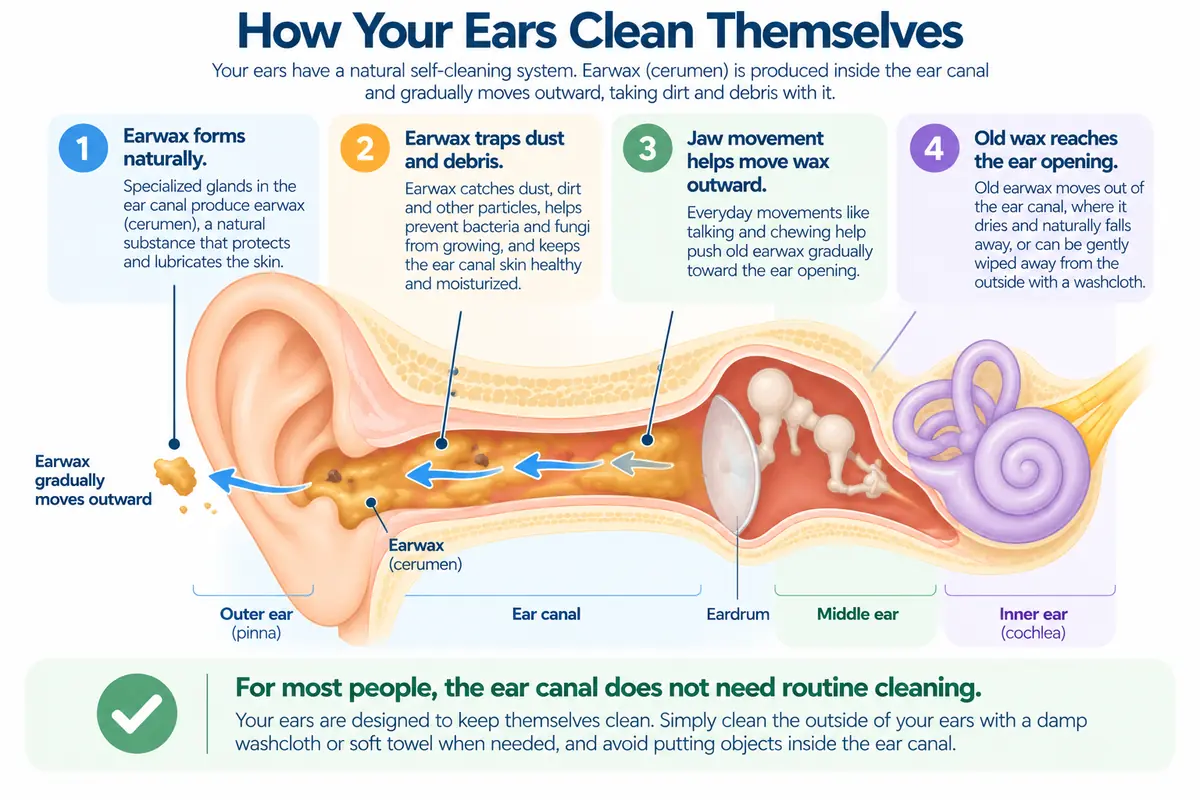
When it comes to your ears, the safest approach is actually very simple: most ear canals clean themselves.
Why Do So Many People Use Q Tips to Clean Their Ears?
So, if healthcare professionals have discouraged this habit for decades, why do so many people still do it?
For many Canadians, using cotton swabs for ear cleaning is simply something they grew up watching parents and grandparents do. Older advertising and packaging also contributed to the misconception that cotton swabs belonged in the ear, even though manufacturers now include warnings against inserting them into the ear canal.
People also often mistake healthy earwax for something dirty that needs to be removed.
You might notice:
- A feeling of fullness
- Visible earwax near the ear opening
- Itchy ears
- A habit of cleaning your ears after showering
These experiences often lead people to reach for a cotton swab, even though they’re usually signs of a healthy, functioning ear rather than poor hygiene. Many people have been using cotton swabs for decades because that’s what they’ve always done, and they’re often surprised to learn that their ears were designed to clean themselves.
Why Healthcare Professionals Say Never Put Q Tips Inside Your Ear
The ear is remarkably good at taking care of itself, and in most cases, inserting anything into the ear canal creates more problems than it solves.
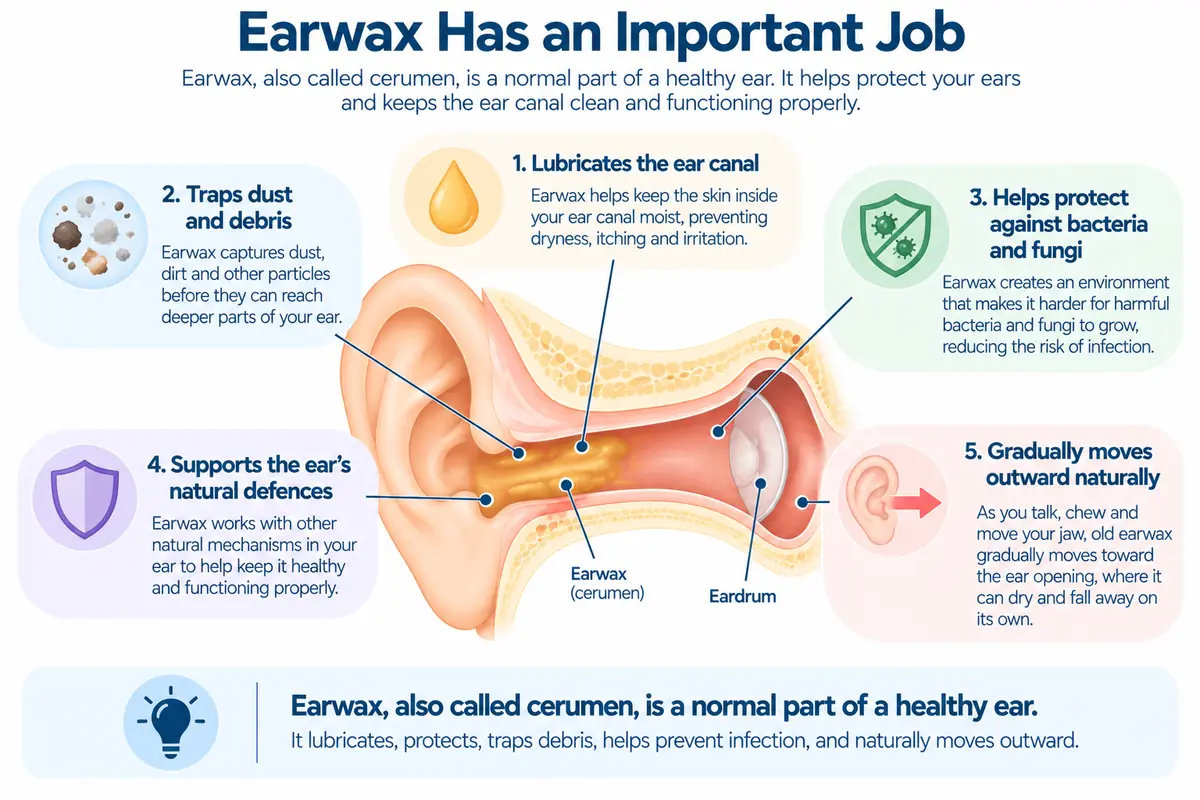
Earwax Has an Important Job
Earwax, also called cerumen, isn’t dirt. It’s a natural substance that protects your ears by:
- Lubricating the delicate skin inside the ear canal
- Trapping dust, dirt, and debris
- Helping prevent bacteria and fungi from growing
- Reducing the risk of infection
- Naturally moving outward as your jaw moves when talking and chewing
In other words, earwax is an important part of your hearing health.
What Happens When You Use a Cotton Swab?
Instead of removing earwax, cotton swabs often push it deeper into the ear canal, and over time, this can lead to:
- Impacted earwax
- Scratches inside the ear canal
- Skin irritation
- Ear infections
- Temporary hearing loss
- Ringing in the ears (tinnitus)
- Pain
- Cotton fibres left behind in the ear canal, which can build up over time
- In rare cases, injury to the eardrum
| The Ear’s Natural Cleaning Process | Cleaning with Q Tips |
|---|---|
| Earwax gradually moves outward | Earwax is often pushed deeper |
| Earwax protects the ear | Protective wax is removed |
| Low risk of injury | Increased risk of scratches and injury |
| Ear cleans itself naturally | Can lead to impacted earwax |
One of the biggest misconceptions is that cotton swabs remove earwax, and more often than not, they simply push the wax farther in, making it harder to remove later. The American Academy of Otolaryngology and other hearing organizations continue to recommend keeping cotton swabs out of the ear canal because the risks outweigh any perceived benefit.
If You Shouldn’t Use Q Tips, How Should You Clean Your Ears?
The answer surprises many people: most ears don’t need to be cleaned at all. Your ears naturally move old earwax toward the opening where it dries and falls away on its own, and if you notice wax on the outside of your ear, simply wipe it away with a damp washcloth or a soft towel.
If earwax becomes excessive, safe options might include:
- Ear drops recommended by a healthcare professional
- Professional earwax removal
- Ear irrigation when appropriate
It’s important to remember that ear irrigation isn’t suitable for everyone, and people with a perforated eardrum, a history of ear surgery, chronic ear infections, or certain medical conditions should avoid irrigation unless specifically advised by a healthcare professional.
Signs You Should See a Healthcare Professional Instead
Avoid trying to remove earwax yourself if you experience:
- Sudden hearing loss
- Ear pain
- Drainage from the ear
- Persistent dizziness
- Ringing in one ear
- Bleeding
- A feeling that your ear is completely blocked
- Symptoms that don’t improve
Professional assessment is the safest way to determine what’s causing your symptoms.
When Earwax Becomes a Problem
Although earwax is beneficial, sometimes it builds up faster than it naturally clears, and impacted earwax can cause:
- Reduced hearing
- A feeling of fullness
- Ringing in the ears
- Ear discomfort
- Dizziness
- Problems wearing hearing aids
The challenge is that these symptoms often resemble hearing loss, and this is why it’s important not to assume earwax is always the cause. During a hearing assessment, a hearing care professional carefully examines your ears and performs appropriate testing to determine whether your symptoms are caused by earwax blockage, hearing loss, or another medical condition.
What Avenir Hearing Wants Clients to Know About Ear Care
At Avenir Hearing, we believe education is one of the most important parts of hearing healthcare. Every person’s hearing is different, which is why we focus on individualized recommendations rather than one-size-fits-all advice.
Whether you’re concerned about earwax, hearing loss symptoms, tinnitus, or hearing protection, our healthcare professionals take the time to understand your hearing health before recommending treatment for you.
We also know many people across New Brunswick and Canada delay seeking help because they assume hearing changes are simply part of getting older. While age-related hearing loss is common, early diagnosis often leads to better communication, improved quality of life, and more treatment options.
Using modern diagnostic equipment and a comprehensive assessment process, we will help determine whether your symptoms are related to earwax blockage, hearing loss, or another issue that requires medical attention.
If ongoing hearing care is recommended for you, we’ll continue supporting you with education, follow-up appointments, and personalized care throughout your hearing journey.
Five Healthy Ear Care Habits Hearing Care Professionals Recommend
- Let your ears clean themselves whenever possible.
- Never insert cotton swabs or other objects into your ear canal.
- Protect your hearing from loud noise by using appropriate hearing protection.
- Pay attention to changes in your hearing rather than assuming they’re caused by earwax.
- Schedule a hearing assessment if symptoms persist or family members notice changes.
Key Takeaways
Q-tips are useful for many everyday tasks, but cleaning inside your ears isn’t one of them. Most ear canals naturally clean themselves, and earwax plays an important role in protecting your hearing. Using cotton swabs often pushes wax deeper, increasing the risk of impacted earwax, irritation, and temporary hearing problems.
If you’re experiencing hearing changes, ear fullness, or recurring earwax blockage, the safest approach is to have your ears assessed by a qualified hearing care professional.
At Avenir Hearing, we’re committed to helping Canadians protect their hearing through education, personalized care, and long-term hearing support.
If you’ve noticed changes in your hearing, book a comprehensive hearing assessment, complete our online hearing screening, or visit your nearest Avenir Hearing clinic to learn more about your hearing health.
Frequently Asked Questions
What is the actual purpose of Q-tips?
Q-tips were designed as versatile cotton swabs for personal care, cosmetics, applying ointments, arts and crafts, and cleaning small surfaces. They were not designed for cleaning inside the ear canal.
What are Q-tips for if not ears?
Cotton swabs are useful for tasks like applying makeup, touching up nail polish, cleaning around small household items, applying creams, and gently cleaning the outer ear. They should never be inserted into the ear canal.
Why did a big chunk of earwax come out?
Large pieces of earwax sometimes come out naturally as the ear cleans itself, and they can also come out after softened earwax loosens or after impacted wax has been pushed around by a cotton swab. If you’re experiencing pain, hearing loss, or recurring wax buildup, it’s best to have your ears examined by a healthcare professional.
Are Q-tips good or bad for you?
Q-tips are useful products when used for their intended purposes. They’re only considered harmful when inserted into the ear canal, where they can push earwax deeper, irritate the skin, or increase the risk of injury.
Leave A Comment