

If you’ve started asking people to repeat themselves, turning up the television, or struggling to follow conversations in busy restaurants, you’re not alone.
Hearing loss is a common part of aging, but many people wait seven to ten years before seeking help. During that time, communication often becomes more difficult, relationships become strained, and everyday activities require more effort.
The good news is that today’s hearing solutions go far beyond hearing aids. Modern hearing healthcare focuses on understanding your unique needs, identifying the cause of your hearing difficulties, and creating a personalized plan that helps you stay connected to the people and activities that you love.
At Avenir Hearing, we believe better hearing is about improving your confidence, independence, and quality of life through compassionate, evidence-based care. Whether you’re experiencing the early signs of hearing loss or helping a loved one take the next step, comprehensive hearing care can make a meaningful difference for you.
Contact Avenir Hearing to learn more about our services and book an appointment today.
What Are Hearing Solutions?
Hearing solutions refer to the full range of services and treatments provided by a hearing care professional (HCP). Rather than focusing on a single product, they take a comprehensive approach to improving hearing health.
Your hearing journey often includes several stages:
- A comprehensive hearing assessment to understand your hearing ability
- A hearing loss diagnosis based on clinical testing
- Personalized treatment recommendations
- Ongoing follow-up and long-term hearing care
| Hearing Problem | Possible Solutions |
|---|---|
| Mild hearing loss | Monitoring or hearing aids |
| Earwax blockage | Earwax management |
| Tinnitus | Counselling and sound therapy |
| Noise exposure | Hearing protection |
| Difficulty hearing conversations | Assistive listening devices, hearing aids, and communication strategies |
How Hearing Loss Affects Quality of Life
Many people think hearing loss only affects their ears, but it often influences nearly every aspect of daily life.
Physical
Missing important sounds like smoke alarms, doorbells, approaching vehicles, or emergency announcements can affect personal safety. Hearing loss can also make driving and navigating busy environments more challenging.
Emotional
Struggling to hear conversations often leads to frustration, embarrassment, anxiety, and reduced self-confidence. Many people become exhausted from concentrating so hard just to keep up.
Social
When conversations become difficult, some people begin avoiding family gatherings, restaurants, community events, or social activities altogether. Over time, this isolation can affect overall wellbeing.
Cognitive
Your brain works harder to fill in missing sounds when hearing becomes more difficult, and this extra listening effort, sometimes called listening fatigue, leaves many people feeling mentally drained at the end of the day.
Professional
For adults who are still working or volunteering, hearing loss can affect meetings, phone calls, teamwork, and confidence in the workplace.
The Different Types of Hearing Solutions
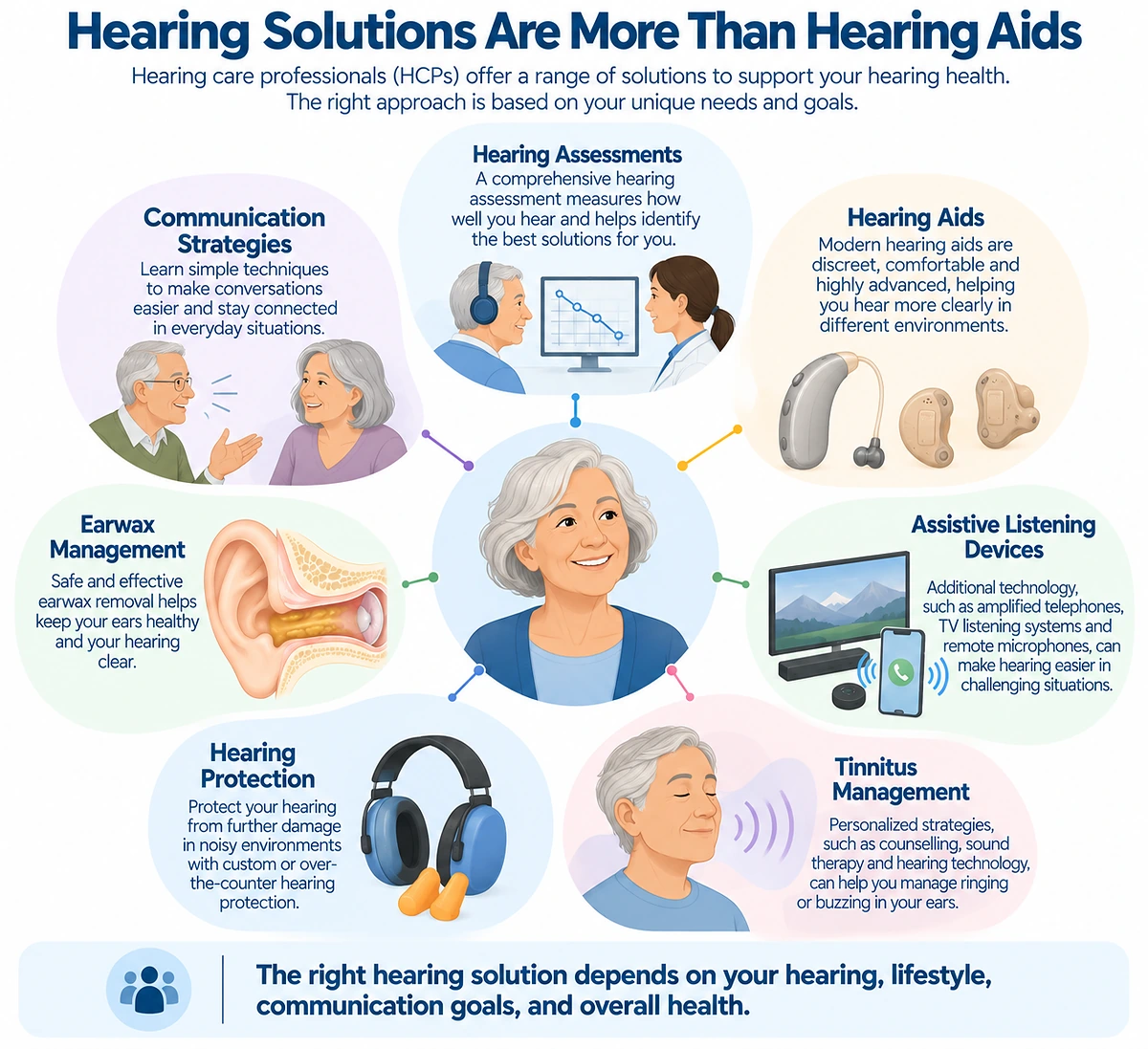
Every person’s hearing needs are different, and that’s why hearing care professionals recommend solutions based on your specific circumstances rather than taking a one-size-fits-all approach.
Hearing Assessments
A comprehensive hearing assessment measures how well you hear different sounds, identifies the type and degree of hearing loss, and helps determine the most appropriate treatment options.
Hearing Aids
Modern hearing aids are discreet, comfortable, and highly advanced. They automatically adjust to different listening environments and are carefully programmed to match your hearing loss. Proper hearing aid fitting and ongoing hearing aid adjustments are essential for long-term success.
Assistive Listening Devices
.Some situations benefit from additional technology, like amplified telephones, TV listening systems, remote microphones, or Bluetooth accessories that improve communication in challenging environments.
Tinnitus Management
If you experience ringing, buzzing, or other phantom sounds in your ears, your HCP might recommend counselling, sound therapy, hearing technology, or other management strategies.
Hearing Protection
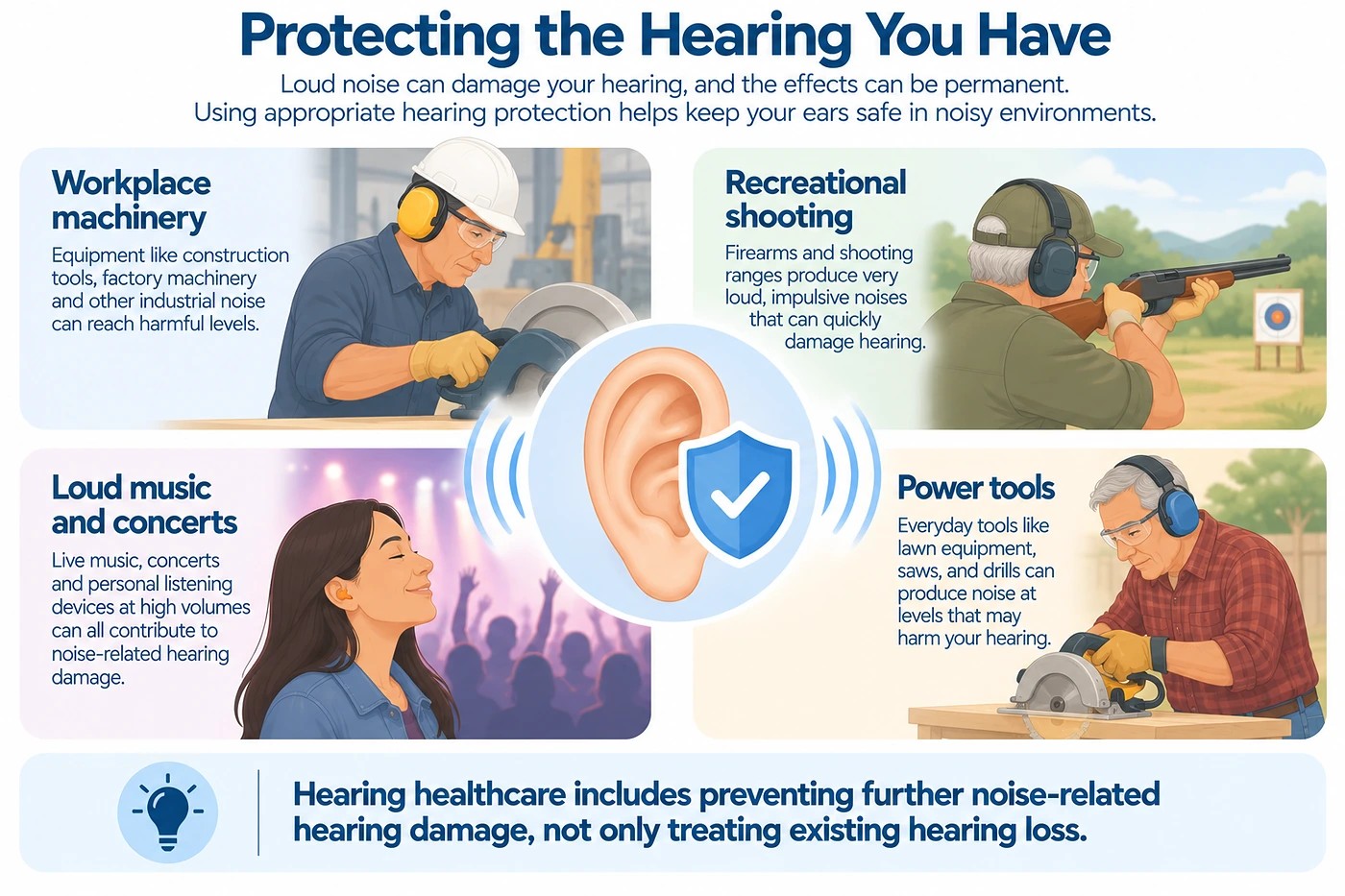
Protecting the hearing you have is just as important as treating hearing loss. Custom hearing protection is particularly valuable for people exposed to workplace noise, recreational shooting, loud music, or power tools, which are common across many industries and hobbies.
Earwax Management
Sometimes hearing problems are caused or worsened by excessive earwax. Your HCP can determine whether earwax is contributing to your symptoms and recommend the appropriate management.
Communication Strategies
Simple techniques like reducing background noise, facing the speaker, improving lighting, and using clear communication habits often make conversations easier for everyone involved.
Why Personalized Care Makes a Difference
No two hearing losses are exactly alike, and even people with similar hearing test results often have different communication goals and lifestyle needs.
When recommending hearing loss treatment, an HCP will consider these factors:
- Your hearing assessment results
- Your daily routines
- Your work or volunteer activities
- Your hobbies
- Vision and dexterity
- Comfort with technology
- Family communication needs
- Your personal preferences and goals
At Avenir Hearing, personalized hearing solutions don’t end after your first appointment. Our approach focuses on long-term hearing wellness through ongoing education, follow-up care, and individualized support.
What to Expect During Your Hearing Care Journey
1. Notice the Signs
Many people first notice they are asking others to repeat themselves or struggling in noisy environments.
2. Comprehensive Hearing Assessment
Your HCP performs detailed testing to understand how your hearing is functioning and identify any underlying concerns.
3. Discussion of Your Results
Your results are explained in plain language, with plenty of time to ask questions and understand your options.
4. Personalized Treatment Recommendations
Your HCP recommends solutions based on your hearing, health, communication challenges, and personal priorities.
5. Technology Fitting
If hearing aids are recommended, they are professionally fitted, programmed, and adjusted specifically for your hearing loss.
6. Follow-Up Appointments
Your hearing changes, and so do your listening needs, so follow-up appointments help fine-tune your hearing aids, answer questions, and ensure you’re getting the best possible results.
7. Long-Term Hearing Care
Hearing healthcare is an ongoing partnership. Regular hearing assessments, maintenance, education, and hearing rehabilitation help you continue hearing your best for years to come.
Why Ongoing Hearing Care Matters
Hearing isn’t static, and it changes over time, which is why ongoing professional care is so important.
Regular follow-up appointments allow your HCP to:
- Monitor changes in your hearing
- Adjust hearing aid settings
- Perform maintenance and cleaning
- Provide counselling and communication support
- Answer new questions as your needs evolve
This long-term relationship is one of the biggest differences between receiving comprehensive hearing care from an HCP and simply purchasing hearing aids. For many adults across New Brunswick and Canada, especially those living in smaller communities or rural areas, having a trusted hearing clinic that provides ongoing support offers peace of mind long after the first appointment.
When Should You Book a Hearing Assessment?
You don’t have to wait until hearing loss becomes severe before seeking help. Consider scheduling a hearing assessment if you:
- Frequently ask people to repeat themselves
- Turn up the television louder than others prefer
- Struggle to hear conversations in restaurants or social gatherings
- Find phone conversations more difficult
- Notice ringing or buzzing in your ears
- Feel tired after long conversations
- Avoid social situations because hearing is challenging
- Have family members commenting on your hearing
Even mild hearing changes are worth discussing with an HCP, and early intervention often leads to better long-term outcomes and more treatment options.
Take the First Step Toward Better Hearing
Modern hearing solutions help people stay active, independent, and connected to the people who matter most. Whether you need hearing aids, communication support, hearing protection, or simply answers about your hearing health, early assessment is one of the most important steps you can take.
If you’re concerned about your hearing or a loved one’s hearing, don’t wait.
Book a comprehensive hearing assessment with an Avenir Hearing HCP or complete our free online hearing screening today.
Frequently Asked Questions
What hearing aid do most hearing care professionals recommend?
There is no single hearing aid that is best for everyone, and HCPs will recommend hearing aids based on your hearing assessment, lifestyle, communication needs, dexterity, budget, and personal preferences. The goal is always to find the solution that provides the best long-term outcome for your individual needs.
What is the 60-60 rule in hearing care?
The 60-60 rule is commonly used as a guideline for safe listening. It recommends listening through headphones at no more than 60% of maximum volume for no longer than 60 minutes at a time to help reduce the risk of noise-induced hearing loss.
Do HCPs remove earwax?
Many HCPs assess whether earwax is affecting your hearing and, depending on the services offered by the clinic and provincial regulations, might provide earwax management or refer you to another healthcare provider if removal is needed.
Leave A Comment